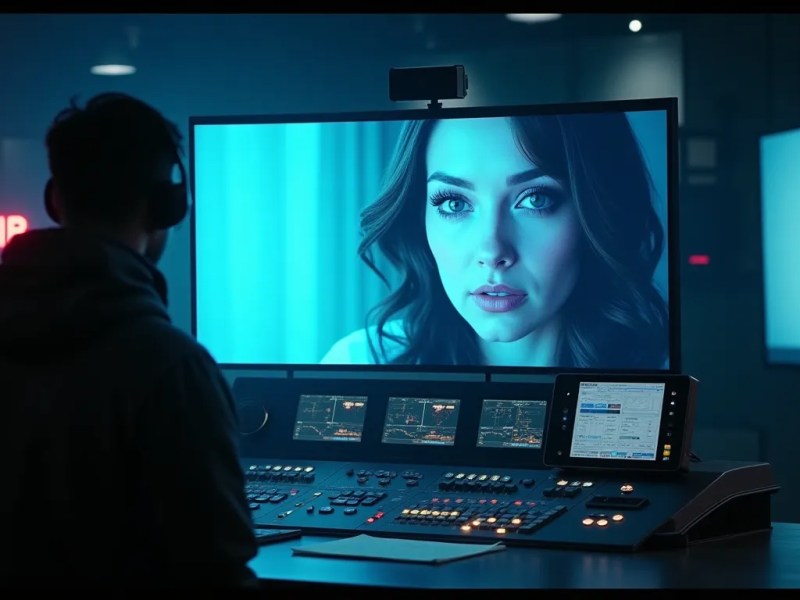
The Financial Times reported something that should be sitting heavier with actors than it seems to be: Chinese TV dramas are already swapping in AI-generated digital doubles for real performers. Not in a lab demo. Not in a proof-of-concept reel some studio put out to drum up investor interest. On shows that are airing right now, with real audiences watching, for roles that used to go to a human being who showed up on set, hit their marks, and got paid.
The details are still thin. We don’t have clean numbers on how many productions are doing this, what it costs versus hiring a real actor, or which roles get the AI treatment versus which stay human. Nobody outside China has done an independent hands-on comparison of quality yet, so treat any claim that these doubles are “indistinguishable” from actors with some caution. But the core fact doesn’t need caveats: a massive, fast-moving TV industry is already using AI doubles instead of hiring actors for certain roles. That’s not a hypothetical anymore. That’s a market decision being made with real money, right now, in one of the biggest content industries on earth.
Hollywood has spent the last few years treating AI actors as a someday problem. Something for the guild negotiating table, something for op-eds, something that will eventually force a reckoning but not this year. China just skipped the debate and went straight to production. If you wanted to know how fast this moves once the economics make sense to a studio, now you know. It’s fast. Faster than most people in Los Angeles or London are budgeting for.
So here’s the real question every actor and every filmmaker should be sitting with: which roles are actually safe from this, and which ones aren’t? Background performers, minor recurring characters, roles built around a look rather than a face people recognize and love — those seem like the first to go, because the economic logic is obvious. A studio doesn’t need to pay, house, feed, and schedule a person for a role nobody’s tuning in to see specifically. The ones that stay human, at least for now, are probably the roles carrying actual star power — the reason someone chose to watch this show over the ten other options on the app.
Given all that, I think actors are approaching this the wrong way if their only move is to fight it or ignore it. The smarter play is to get ahead of it: license your own likeness to AI, on your terms, for a defined trial period — a year, say — and see what actually happens.
Think about what that trial could do. Right now an actor can physically be in maybe one or two films a year. Bodies can only be in one place at a time, schedules only stretch so far, and that hard ceiling caps how much any actor can work and earn no matter how good they are. An AI version of that actor doesn’t have that ceiling. If that actor’s likeness could appear in twenty projects in the same year instead of two, licensed on their own terms with their own cut, that’s not a threat to their income — that’s a multiple of it. Content creators get access to faces audiences already trust and want to watch, without needing to win a bidding war for one of the only two windows an A-lister has open this year. And if people genuinely watch and respond to AI-generated content with a licensed actor’s face in it, that’s proof the audience doesn’t actually care how the performance was produced — they care whether the story and the face together made them feel something. That’s useful information every single working actor should want to have, instead of guessing.
But the part of this that actually excites me isn’t the actor economics. It’s what happens to everyone who isn’t an actor at all. If a screenplay writer with real talent and zero fame can sit down at a laptop, write a great script, generate the movie themselves, and put it out into the world — they don’t need to convince an established star’s agent to say yes. They don’t need a studio’s blessing to get a recognizable face attached. The story itself becomes the star. That’s the version of this technology that should make writers, not actors, the most excited people in the room. For the first time, the thing standing between a great script and an audience isn’t access to talent or capital. It’s just whether the writing is actually good.
That’s a genuinely democratizing shift, and it’s rare that any technology in this industry actually points that direction instead of consolidating power further. China didn’t set out to prove any of this. They just moved first, on pure economics, in a market too big to ignore. The rest of the industry can spend the next year arguing about whether this is fair, or it can spend that year figuring out how to license, structure, and shape it before someone else decides the terms for them.
FAQ
Are AI-generated actors already replacing real actors in TV shows?
Yes. According to the Financial Times, Chinese TV dramas are currently airing episodes that use AI-generated digital doubles instead of hiring human actors for certain roles.
Which acting roles are most at risk from AI digital doubles?
Background performers and minor recurring characters whose value is based on look rather than star recognition appear most at risk, since the economic case for replacing them with AI is strongest.
How could actors benefit from AI instead of being replaced by it?
Actors could license their own likeness for AI-generated projects on their own terms, potentially appearing in many more productions per year than physically possible, turning AI into an income multiplier rather than a threat.
How does AI filmmaking create opportunity for aspiring filmmakers and writers?
AI generation removes the need for star power or studio backing to attach a recognizable face to a project, meaning a talented but unknown writer can write, generate, and release a film where the story itself becomes the draw.
Sources
Related